Switching dentists, or going back after a few years away, comes with a little bit of dread. You don’t know the office, you don’t know the people, and if it’s been a while, there’s that low hum of worry about what they’re going to find.
Here’s the thing: a first visit is mostly about information gathering. Nobody is going to shame you, and in most cases nobody is doing major work that day. It’s a chance for the dentist to understand your mouth and for you to decide whether this is a practice you trust. Knowing how the appointment flows takes a lot of the nervousness out of it.

Before You Even Sit in the Chair
Most of the friction with a new dentist happens before the actual exam, so it helps to get it out of the way.
You’ll fill out a health history. This isn’t busywork. Your medical conditions, medications, and allergies all affect how your dentist treats you, so be honest and thorough. If you take blood thinners, have high blood pressure, or are pregnant, your dentist needs to know.
You’ll also want to bring a few things if you have them:
- A list of any medications you take
- Your dental insurance information, if you have coverage
- Records or digital images from a previous dentist, if you can get them transferred
At Cool Creek Family Dental, the front desk handles most of this ahead of time when you book, so the day of your visit is lighter. You can request your appointment online at any hour, which is easier than playing phone tag.
The Exam Itself
Once you’re in the chair, a first visit usually covers a handful of standard steps.
Digital images. A new dentist almost always takes a fresh set of images, even if you had some recently, because they need a current baseline. Today’s digital images use a fraction of the radiation older film systems did. They show what the eye can’t: decay between teeth, bone levels, problems brewing under the gumline.
A full exam. The dentist checks each tooth for decay and looks at existing fillings, crowns, and other work to see how it’s holding up. They examine your gums and measure the pockets around your teeth to gauge gum health.
An oral cancer screening. This is quick and painless. The dentist looks at the soft tissue of your mouth, your tongue, and your throat, and feels along your jaw and neck. The American Dental Association recommends this as a routine part of dental exams, and catching anything early matters enormously.
A cleaning, in many cases. If your gums are healthy, a hygienist will often do a standard cleaning the same day. If there are signs of gum disease, the dentist may recommend a different type of cleaning at a follow-up instead. They’ll explain why rather than just rebooking you.
Then You Talk
The part that actually builds trust is the conversation at the end. A good dentist walks you through what they found, shows you the digital images, and explains your options in plain language. Dr. Adam Kristoff and Dr. Nikita Mistry make a point of this. If something needs attention, you’ll see the evidence and hear the reasoning, not a sales pitch. If everything looks good, they’ll tell you that too and send you on your way.
This is also your moment to ask questions. How often should you be coming in? Is that sensitive spot something to watch? What would they do if it were their own mouth? The answers, and how willing the dentist is to give them, tell you a lot about whether you’ve found the right office.
A Note If It’s Been a Long Time
Plenty of people avoid the dentist for years, usually out of anxiety or a bad past experience, and then dread the lecture they’re sure is coming. You won’t get one here. Whatever shape your teeth are in, the staff has seen it before and the goal is simply to get you back on track.
If anxiety is the thing keeping you away, say so when you book. There are real options for making visits comfortable, and a dentist who takes that seriously is one worth keeping.
Frequently Asked Questions
What happens at a first dental visit?
A first visit is mostly information gathering: health history, digital images, a full exam of your teeth and gums, an oral cancer screening, and usually a cleaning if your gums are healthy. It ends with a conversation about what they found and what, if anything, needs attention.
Will they judge me if it’s been years?
No. Whatever shape your teeth are in, the staff has seen it before, and the goal is simply to get you back on track. If anxiety is what’s kept you away, say so when you book and they’ll plan around it.
How often should I go to the dentist?
For most people, every six months for a checkup and cleaning. Your dentist may recommend a different schedule based on your gum health and risk factors, and they’ll explain why rather than just booking you in.
Finding the Right Fit
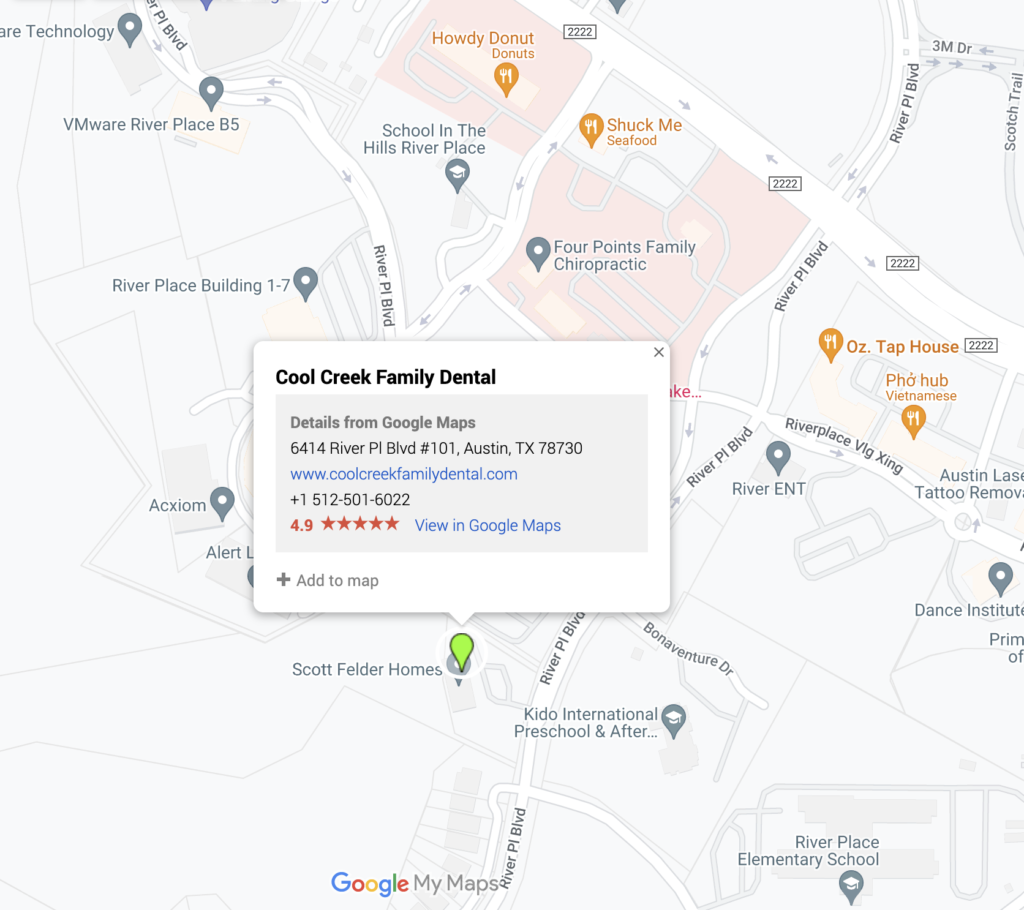
A first visit is as much your evaluation of the dentist as it is theirs of your teeth. You want a clean, modern office, staff who explain things clearly, and a dentist who listens. Cool Creek Family Dental serves patients across Austin, including Steiner Ranch, River Place, Four Points, and Lakeway, and welcomes new patients with same-week appointments.
When you’re ready, you can request an appointment online or call us at (512) 501-6022. We’ll take it from there.