Your gums are puffy. Maybe red. Maybe bleeding a little when you brush. Your first instinct might be to brush harder, thinking you’re not cleaning well enough.
Don’t do that. Brushing harder on swollen gums will only make things worse.
Swollen gums are one of those things that can be completely harmless or a sign of something that needs real treatment. The trick is knowing which one you’re dealing with. Here’s how to tell.
The Most Common Causes (Ranked by How Often We Actually See Them)

Gingivitis
This is the number one reason people walk into our office with swollen gums. Gingivitis is gum inflammation caused by plaque buildup along the gumline. It’s very common and, when caught early, completely reversible.
What it looks like: red, puffy gums that bleed when you brush or floss. You might not have any pain at all.
What causes it: usually, not flossing enough. Plaque builds up between your teeth and along the gumline, irritates the tissue, and your gums swell in response. A professional cleaning removes the buildup, and better home care keeps it from coming back.
Hormonal Changes
Pregnancy, puberty, menstruation, menopause. Hormonal shifts increase blood flow to your gums and make them more sensitive to plaque that might not have bothered you before.
“Pregnancy gingivitis” affects a significant percentage of pregnant women, usually in the second trimester. The gums swell, bleed easily, and look redder than normal. It usually resolves after delivery, but it still needs monitoring. If you’re pregnant and your gums are acting up, mention it at your next dental appointment.
Medication Side Effects
Certain medications cause gum tissue to overgrow, a condition called gingival hyperplasia. Blood pressure medications (calcium channel blockers like amlodipine), anti-seizure drugs (phenytoin), and immunosuppressants (cyclosporine) are common culprits.
If you’ve recently started a new medication and noticed your gums changing, tell your dentist. They can help manage it while you work with your physician on alternatives.
Something Stuck Below the Gumline
The popcorn kernel. The sesame seed. The tortilla chip sliver. This happens more than you’d think. The gum tissue reacts with localized swelling that’s red, tender, and puffy. Sometimes you can work it out with careful flossing. Sometimes you need a dentist.
If swelling is limited to one spot and came on suddenly after eating, this is probably the cause.
Infection or Abscess
This one needs attention right away. A dental abscess is a pocket of pus caused by a bacterial infection at the root of a tooth or in the gum tissue.
What it looks like: significant swelling, often on one side of the mouth. The area may be warm to the touch. You might see a bump on the gum that looks like a pimple. Fever, swollen lymph nodes, and a bad taste in your mouth are warning signs.
Abscesses do not go away on their own. The infection needs to be drained, and you’ll likely need antibiotics. Left untreated, it can spread to your jaw, head, or neck.
Learn more about emergency dentistry
Ill-Fitting Dental Work
Crowns, bridges, or dentures that don’t fit properly can rub against gum tissue and cause chronic irritation. If you’ve had dental work done recently and the gums around it stay inflamed, mention it at your next visit.
When to Wait and When to Call
You can probably wait a few days if the swelling is mild, just started, there’s no fever, and you can still eat normally. Try salt water rinses and better flossing. If it improves, you likely had mild irritation or something lodged in your gums.
Call Cool Creek Family Dental at (512) 521-6010 today if:
- The swelling is getting worse
- You have a fever or see pus
- The pain is severe or spreading
- You can’t fully open your mouth
- It’s lasted more than a week
Dr. Adam Kristoff and Dr. Nikita Mistry can usually identify the cause quickly with an exam and X-ray.
What You Can Do at Home
While you’re deciding whether to call or waiting for your appointment, a few things can help:
- Warm salt water rinse. Half a teaspoon of salt in warm water. Swish gently for 30 seconds, 2 to 3 times a day.
- Gentle brushing. Switch to a soft-bristled toothbrush. Still brush the swollen area, just don’t attack it.
- Over-the-counter anti-inflammatory. Ibuprofen (Advil) reduces both pain and inflammation.
- Avoid irritants. Skip hot, spicy, or crunchy foods on that side until the swelling goes down.
- Skip alcohol-based mouthwash. It can dry out your mouth and make things worse. Stick with the salt water.
What the Dentist Will Do
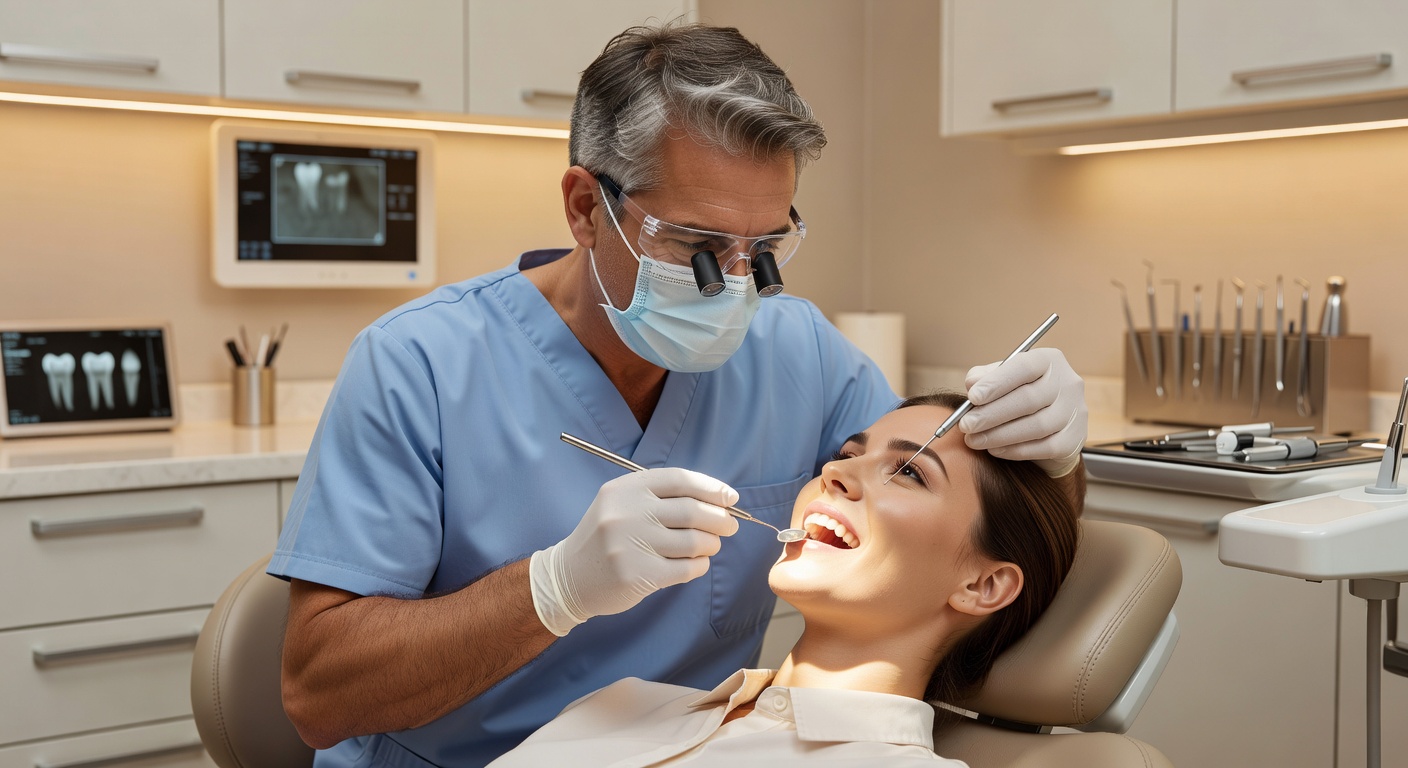
First, an exam. The dentist checks the area and asks when it started, whether you have pain, and what you’ve tried at home. Then X-rays to see what’s happening below the surface.
Treatment depends on the cause:
- Gingivitis: Professional cleaning and a conversation about home care.
- Abscess: Drainage, antibiotics, and follow-up treatment (often a root canal or extraction).
- Periodontal disease: A deep cleaning (scaling and root planing) to remove bacteria below the gumline. Learn more about periodontal therapy
- Stuck food or debris: Removal, irrigation, and you’re on your way.
- Ill-fitting dental work: Adjustment or replacement of whatever’s causing the irritation.
Prevention
You’ve heard all of this before. That doesn’t make it less true.
Floss every day. Not “when you remember.” Every day. This single habit prevents the majority of gum issues we see.
Brush twice a day with a soft-bristled brush. Electric toothbrushes with pressure sensors are great because they stop you from brushing too hard.
Don’t skip dental cleanings. Tartar can’t be removed at home. It hardens onto your teeth and causes slow inflammation you don’t notice until it’s a problem. Every six months, or every three to four months if you have a history of gum disease.
Tell your dentist about medication changes. If you’ve started something new and your gums seem different, it might be related.
Don’t Guess. Get It Checked.
Most minor gum swelling resolves within a few days with good home care. If yours hasn’t, something deeper is going on.
Call Cool Creek Family Dental at (512) 521-6010. Dr. Kristoff and Dr. Mistry have been helping patients in the River Place, Four Points, Steiner Ranch, Lakeway, and Bee Cave areas figure out what’s going on with their gums for years. They’ll give you an honest answer and a clear plan.
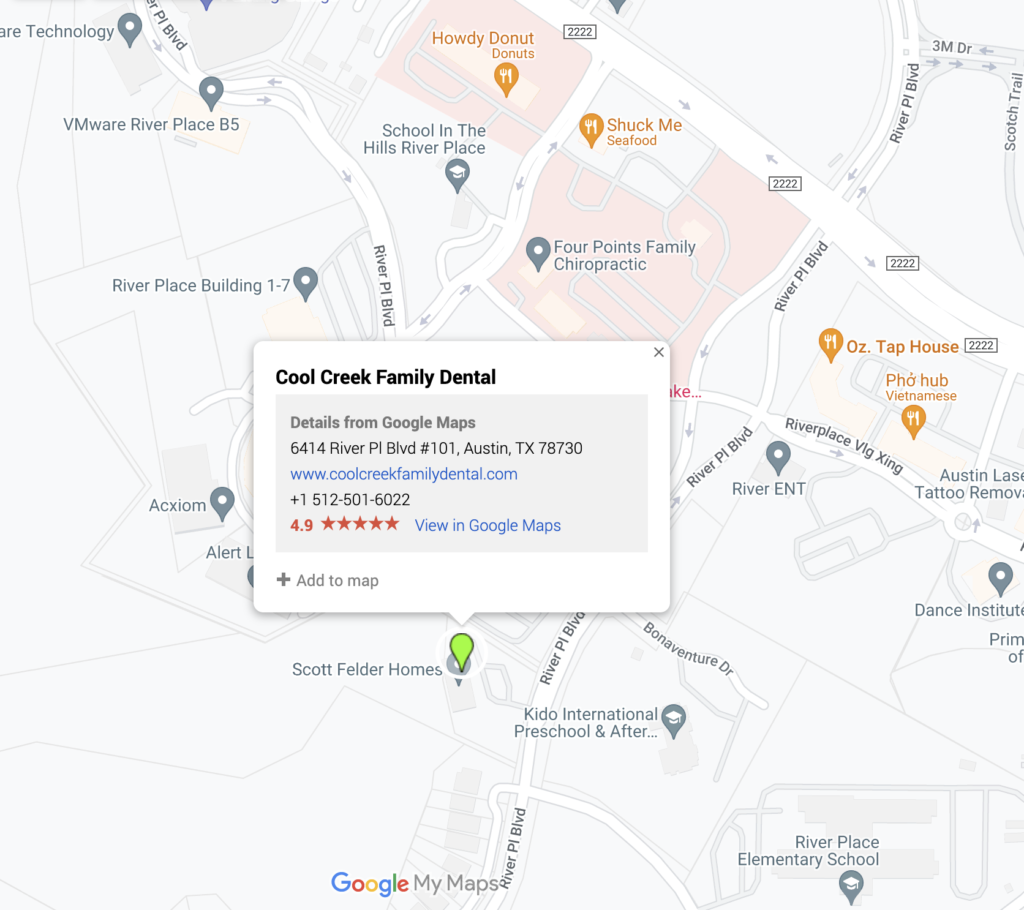
6414 River Place Blvd, Suite 101, Austin, TX 78730
Learn more about periodontal therapy | General dentistry services
Frequently Asked Questions
Why are my gums swollen even though I brush every day?
Brushing alone doesn’t clean between your teeth. Without daily flossing, plaque hardens into tartar along the gumline and causes inflammation. Hormonal changes, medications, and infections can also cause swelling.
Can swollen gums go away on their own?
Sometimes. Mild irritation or a food particle may resolve in a few days with salt water rinses and flossing. If it lasts more than a week, gets worse, or comes with fever or pus, see a dentist.
Is gum swelling a sign of gum disease?
It can be. Swollen, red gums that bleed when you brush are the hallmark signs of gingivitis. Gingivitis is reversible with professional cleaning and better home care. Untreated, it can progress to periodontitis and eventually tooth loss.
When should I see a dentist for swollen gums?
If the swelling lasts more than a week, is getting worse, comes with fever or pus, or the pain is severe. Call Cool Creek Family Dental at (512) 521-6010.
What does the dentist do for swollen gums?
An exam and X-rays to determine the cause, then treatment based on what they find: professional cleaning for gingivitis, antibiotics for an abscess, deep cleaning for periodontal disease, or removal of trapped debris.