Your dentist says, “You need a deep cleaning.” And you’re sitting there thinking, “Isn’t that what I came in for?”
It’s a fair question. The terminology is confusing, and a lot of people assume a deep cleaning is just a more thorough version of a regular cleaning. It’s not. They’re two different procedures for two different situations, and understanding the difference matters because it affects your gum health, your treatment plan, and your wallet.
Here’s a plain-language breakdown of what each one actually involves.
What a Regular Cleaning Is

A regular cleaning is what most people get twice a year. Your hygienist calls it a “prophylaxis,” which is just a fancy word for preventive cleaning.
The hygienist removes plaque and tartar from the surfaces of your teeth, above the gumline. They’ll polish your teeth, floss between them, and check for any obvious issues. Takes about 45 minutes to an hour.
This type of cleaning is for people with generally healthy gums. No bone loss, no deep pockets, no active gum disease. It’s maintenance. If your gums are in good shape, a regular cleaning every six months is all you need.
What a Deep Cleaning Is
A deep cleaning, officially called scaling and root planing, goes below the gumline. That’s the key difference.
When plaque and tartar build up below your gums, they create pockets between your teeth and gum tissue. Bacteria settle into those pockets and start breaking down the bone that holds your teeth in place. A regular cleaning can’t reach that.
During scaling, the hygienist or dentist removes tartar and bacteria from below the gumline and from the root surfaces. Root planing smooths out rough spots on the roots where bacteria tend to collect, which helps your gums reattach to your teeth.
Deep cleanings are usually done over two visits, one side of the mouth at a time. Local anesthesia is common because working below the gumline can be uncomfortable. It’s more involved than a regular cleaning, but it’s not surgery.
How Do You Know Which One You Need?
Your dentist doesn’t just pick one at random. There’s a specific way to determine whether you need a regular cleaning or a deep cleaning: pocket depth measurements.
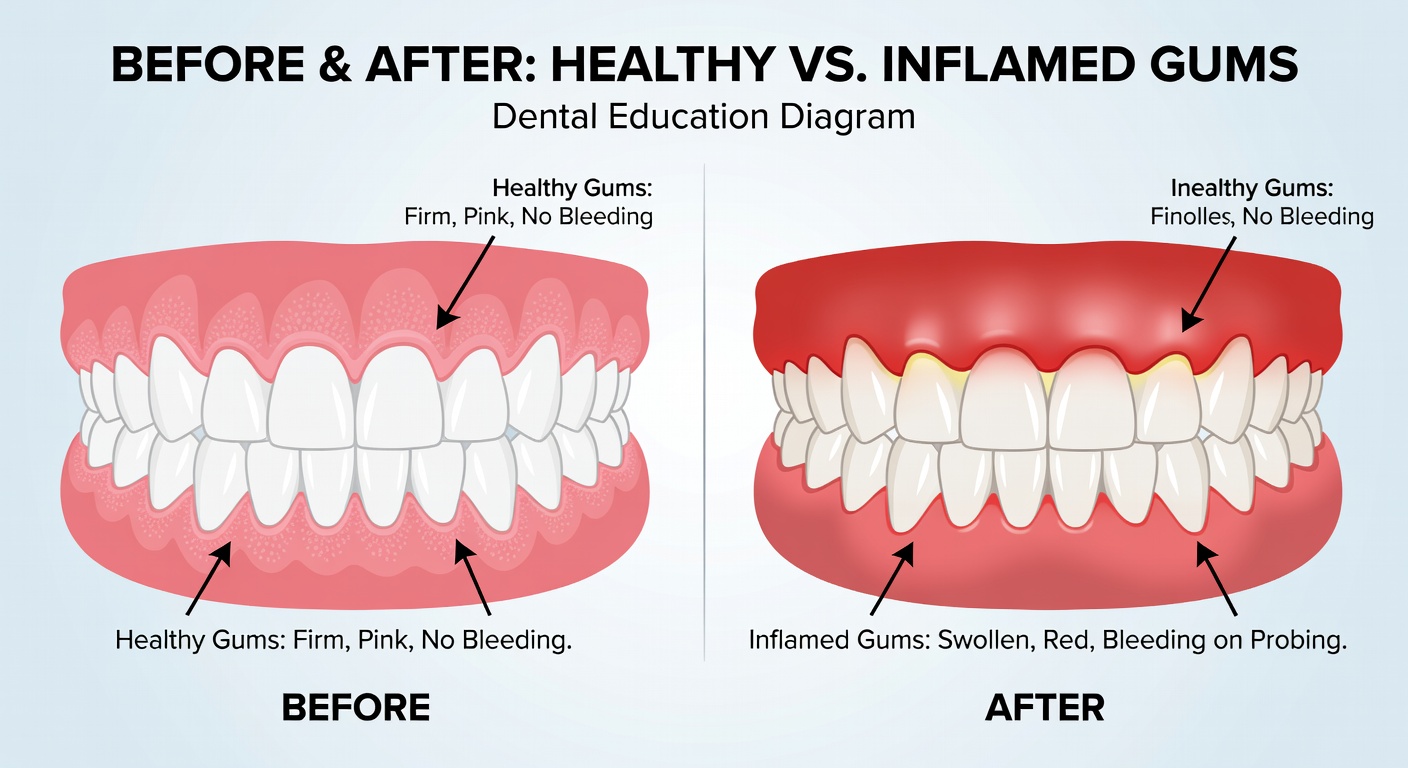
At your appointment, the dentist or hygienist uses a small probe to measure the space between your gums and your teeth, all the way around your mouth. Healthy gums have pockets that measure 1 to 3 millimeters. Once those pockets hit 4 millimeters or deeper, that’s a sign of gum disease, and a regular cleaning won’t cut it.
Beyond the numbers, there are signs you might be heading toward needing a deep cleaning:
- Gums that bleed when you brush or floss. A little pink on your toothbrush once in a while is one thing. Consistent bleeding is a problem.
- Bad breath that won’t go away. Not morning breath. Persistent bad breath that sticks around no matter what you do. Bacteria trapped in deep pockets produce that smell.
- Gums pulling away from your teeth. If your teeth look longer than they used to, your gums may be receding. That’s a sign the tissue is breaking down.
- Loose teeth or shifting bite. By this point, bone loss is likely already happening. This is advanced gum disease, and it needs treatment right away.
At Cool Creek Family Dental, Dr. Adam Kristoff and Dr. Nikita Mistry will walk you through your pocket measurements and explain exactly why they’re recommending what they’re recommending. No upselling. If you need a regular cleaning, that’s what you’ll get. If you need a deep cleaning, they’ll show you the X-rays and the numbers and tell you why.
What Happens If You Skip the Deep Cleaning
This isn’t a scare tactic. This is just what actually happens when gum disease goes untreated.
Gingivitis turns into periodontitis. The pockets get deeper. The bone around your teeth starts to break down. Your gums recede. Eventually, teeth loosen and fall out, or they need to be extracted.
Gum disease is also linked to heart disease, diabetes complications, and respiratory issues. The bacteria in your mouth don’t stay in your mouth.
The good news: if your dentist catches it at the deep-cleaning stage, the progression can usually be stopped. You treat it now so it doesn’t become something much bigger later.
Cost and Insurance
Here’s the practical stuff. A regular cleaning (prophylaxis) is considered preventive care and is covered by most dental insurance plans at 100%, twice a year.
A deep cleaning (scaling and root planing) is classified as a therapeutic or periodontal procedure. Most dental insurance covers it because it’s medically necessary, not cosmetic. Coverage typically falls in the 50% to 80% range depending on your plan.
Without insurance, a deep cleaning in the Austin area generally runs $150 to $350 per quadrant (your mouth has four quadrants), so $600 to $1,400 for the full mouth. That’s more than a regular cleaning, but it’s far less than the implants and extractions that come later if gum disease goes untreated. Cool Creek’s front desk can check your insurance benefits before your appointment and give you a clear picture of what you’ll owe.
What Recovery Looks Like
After a deep cleaning, expect some tenderness and sensitivity for a few days. Your gums might be sore. Cold drinks might sting a bit more than usual. This is normal and settles down within a week for most people.
You’ll come back for a follow-up in about 4 to 6 weeks so the dentist can recheck your pocket depths and see how your gums are responding. In many cases, the pockets shrink and the gums tighten back up. If they do, you move to a maintenance schedule (usually cleanings every 3 to 4 months instead of every 6).
Most people describe it as “pressure but not pain.” Dr. Kristoff and Dr. Mistry keep you comfortable throughout.
The Bottom Line
A regular cleaning keeps healthy gums healthy. A deep cleaning treats gum disease before it causes permanent damage. They’re not interchangeable, and your dentist isn’t recommending a deep cleaning to pad the bill. They’re recommending it because the numbers on the probe say you need it.
Not sure which cleaning you need? Call Cool Creek Family Dental at (512) 521-6010 to schedule an appointment. We’ll measure your gum health, show you where things stand, and tell you straight.
6414 River Place Blvd, Suite 101, Austin, TX 78730
Learn more about periodontal therapy | General dentistry services
Frequently Asked Questions
Is a deep cleaning the same as a regular cleaning?
No. A regular cleaning removes plaque above the gumline for healthy gums. A deep cleaning goes below the gumline to treat gum disease by removing bacteria from periodontal pockets and root surfaces.
Does a deep cleaning hurt?
Most patients say it’s uncomfortable but not painful. Local anesthesia numbs the area, and post-procedure soreness lasts a few days. Over-the-counter pain relievers and salt water rinses help.
How much does a deep cleaning cost?
In the Austin area, $150 to $350 per quadrant. Most dental insurance covers a significant portion because it’s medically necessary. Cool Creek’s front desk can verify your coverage before your visit.
How often do I need a deep cleaning?
Most people only need one. After treatment, you move to a maintenance schedule with cleanings every 3 to 4 months.
Can I just get a regular cleaning instead?
If your pocket depths are 4 millimeters or more, a regular cleaning can’t reach the problem. Skipping the deep cleaning lets gum disease progress toward bone loss and tooth loss.