Tooth Pain When Chewing: What It Means and When to Worry
You take a bite of your lunch and get hit with a sharp, sudden tooth pain. Maybe it fades after a few seconds. Maybe it lingers. Either way, it’s hard to ignore and it’s hard not to wonder what’s going on in there.
Tooth pain when chewing is one of the most common reasons people call a dentist, and it can point to a range of issues some minor, some serious. The tricky part is that the pain itself doesn’t always tell you how big the problem is. A cracked tooth can cause occasional, fleeting pain for weeks before it becomes a full-blown emergency. A cavity might ache only when you chew on one side.
Here’s what your tooth might be telling you, and how to know when it’s time to stop guessing and call us.
Common Causes of Pain When Biting or Chewing
A Cracked or Fractured Tooth
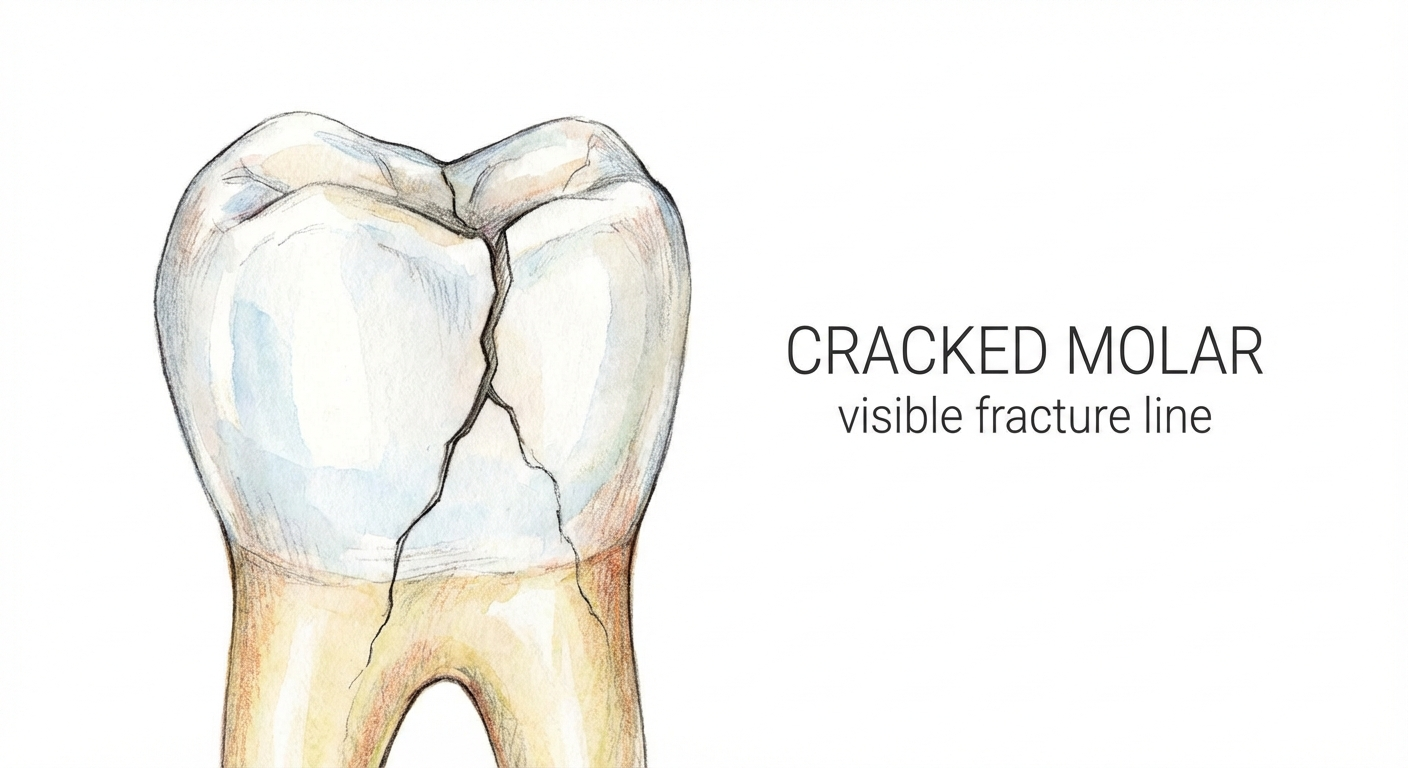
This is one of the most frequent causes of chewing pain, especially in adults. Cracks don’t always show up on X-rays, and the pain can come and go which makes people assume it’s nothing serious.
What it feels like: A sharp, quick pain when you bite down, often on a specific tooth. It may disappear the moment you release the bite. You might notice it only with certain foods or only when chewing on one side.
Why it matters: Even a hairline crack can deepen over time. If it reaches the pulp — the nerve and blood supply at the center of the tooth — you’re looking at a root canal or extraction. Catching it early usually means a crown can save the tooth.
A Cavity That’s Gone Deep
Small cavities often cause no symptoms at all. But once decay works its way closer to the nerve, chewing can push on the weakened tooth structure and trigger pain.
What it feels like: A dull ache or sharp jolt when food presses into the tooth. You might also notice sensitivity to sweet, hot, or cold foods.
Why it matters: The deeper the decay, the more involved the treatment. What could have been a simple filling may become a root canal if you wait too long.
An Abscess or Infection
When bacteria reach the pulp of your tooth through a deep cavity, a crack, or gum disease — an infection can form at the root tip. This is called a periapical abscess, and it needs treatment right away.
What it feels like: Throbbing pain that doesn’t let up, sensitivity to pressure, swelling in the gum near the affected tooth. You might also have a fever, a bad taste in your mouth, or pain that radiates into your jaw and ear.
Why it matters: Dental infections don’t resolve on their own. Left untreated, they can spread to surrounding tissue and bone. In rare but serious cases, the infection can become systemic. If you’re experiencing these symptoms, call us at (512) 501-6022 this is one you shouldn’t sit on.
A Failing or Loose Filling
Fillings don’t last forever. Over time, they can crack, loosen, or develop gaps between the filling material and the tooth. Bacteria can work their way into those gaps and cause new decay underneath.
What it feels like: Pain or sensitivity in a tooth that’s already been treated. You might feel a rough edge or notice that something feels different when you bite.
Gum Disease Affecting the Tooth’s Support
Advanced gum disease (periodontitis) breaks down the bone and tissue that hold your teeth in place. When that support weakens, chewing can cause pain not in the tooth itself, but in the structures around it.
What it feels like: A dull, aching pressure when you chew, sometimes with bleeding gums. The tooth might feel slightly loose.
Why it matters: Gum disease is the leading cause of adult tooth loss. If chewing pain is coming from the gums rather than the tooth, you need periodontal treatment — and the sooner you start, the more you can save.
Bruxism (Teeth Grinding)
If you clench or grind your teeth — especially at night — it puts enormous pressure on your teeth and jaw. Over time, this can cause generalized soreness, wear down enamel, and even crack teeth.
What it feels like: Pain or tenderness across multiple teeth that is hard to pinpoint, especially in the morning. Your jaw might feel tight or sore. You might notice your teeth look flatter than they used to.
When to Call the Dentist
Call us today if you experience: – Sharp pain on a specific tooth every time you bite down – Pain accompanied by swelling, fever, or a bad taste – A visible crack, chip, or dark spot on the tooth – Pain that’s getting worse over days, not better – A tooth that feels loose.
Schedule an appointment soon if: – You have mild, intermittent sensitivity when chewing – A previously treated tooth starts bothering you again – You notice bleeding gums when you eat or brush.
The general rule: if the pain is changing your behavior — you’re avoiding foods, chewing only on one side, or taking painkillers regularly — something needs attention.
What Happens When You Come In
At Cool Creek Family Dental, we start with a thorough examination. Dr. Kristoff or Dr. Mistry will check the tooth visually, test it with gentle pressure, and take X-rays if needed. For hard-to-detect cracks, we may use a bite test or transillumination (shining a light through the tooth to reveal fracture lines).
Once we know what’s going on, we’ll walk you through your options. We believe in explaining things clearly and letting you make informed decisions — no pressure, no scare tactics.
Depending on the cause, treatment might be: – A filling for a cavity caught early – A crown for a cracked or weakened tooth – Root canal therapy if the nerve is involved – Periodontal treatment for gum-related tooth pain – A night guard if grinding is the culprit
We offer sedation dentistry for patients who feel anxious about procedures, and our office was designed to make the experience as comfortable as possible — including massaging dental chairs and views of the canyon preserve right outside our windows.
Don’t Ignore What Your Teeth Are Telling You
Tooth pain when chewing is your body’s way of saying something needs attention. It might be minor. It might not be. But the one thing it won’t do is fix itself.
The earlier you come in, the simpler and less expensive the solution usually is. A crack caught early is a crown. Caught late, it’s an extraction and an implant. A cavity caught early is a filling. Caught late, it’s a root canal.
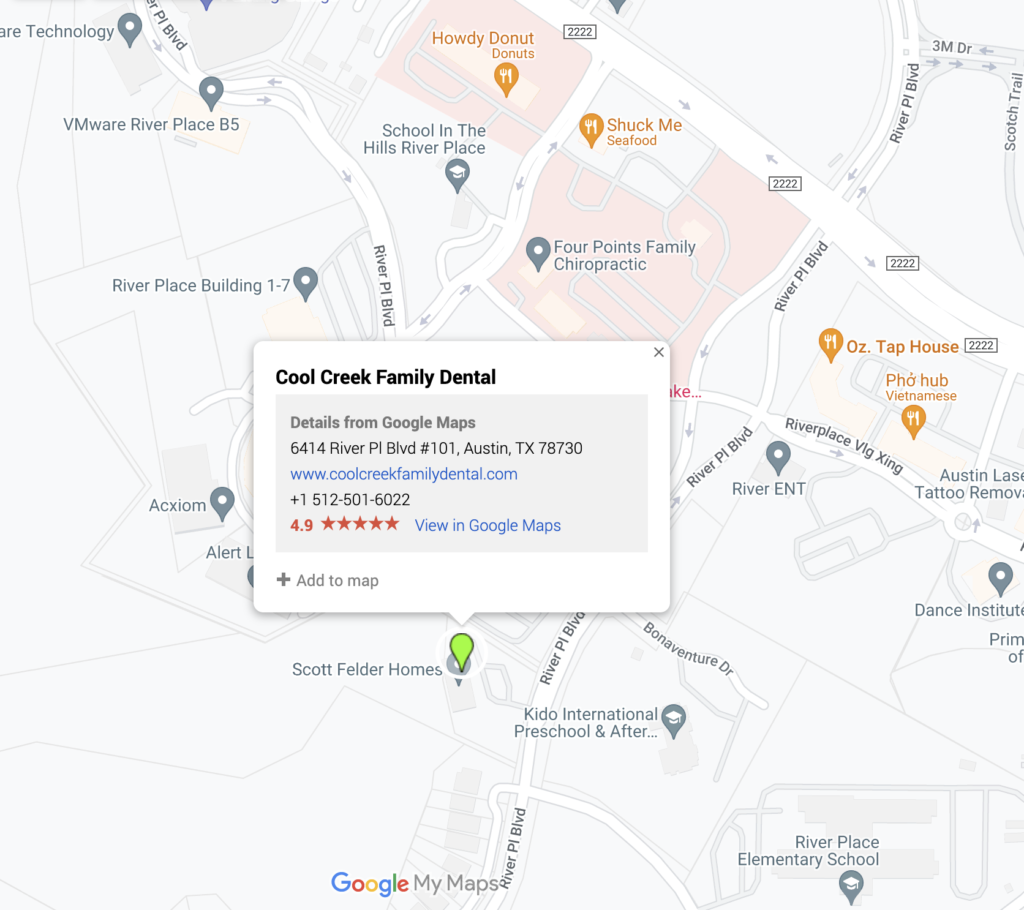
Call Cool Creek Family Dental at (512) 501-6022 or request an appointment online. We’re at 6414 River Place Blvd, Suite 101 in River Place — serving Steiner Ranch, Four Points, Hudson Bend/Lakeway, Westlake and the greater Austin community.
Frequently Asked Questions
Why does my tooth hurt only when I chew? Chewing creates pressure that can aggravate a crack, cavity, or loose filling that otherwise doesn’t cause symptoms. The tooth pain is triggered by the force of biting, which pushes on weakened or damaged tooth structure.
Can a cracked tooth heal on its own? No. Unlike bones, teeth can’t regenerate or heal themselves. A cracked tooth will either stay the same or get worse. Early treatment with a crown can prevent the crack from reaching the nerve.
Should I go to the ER for tooth pain? Emergency rooms can prescribe antibiotics and tooth pain relief, but they can’t treat the underlying dental problem. For actual dental treatment, you need a dentist. Call us at (512) 501-6022 — we keep same-day slots open for emergencies.
How do I know if my tooth pain is serious? Warning signs include tooth pain that wakes you up at night, swelling in your face or gums, fever, tooth pain that radiates to your jaw or ear, or a tooth that feels loose. Any of these warrant a same-day call.
Where is Cool Creek Family Dental? We’re at 6414 River Place Blvd, Suite 101, Austin, TX 78730 — in the River Place neighborhood, minutes from Steiner Ranch, Four Points, and Hudson Bend.